Thursday, August 20, 2015

Saturday, August 8, 2015
“Aluminum Poisoning Of Humanity Via Geoengineering”
http://www.collective-evolution.com/2015/07/03/nuclear-chemist-publishes-groundbreaking-with-details-about-aluminum-poisoning-of-humanity-via-geoengineering/

Nuclear Chemist Publishes Groundbreaking Paper With Details About: “Aluminum Poisoning Of Humanity Via Geoengineering”
Within the past couple of years alone, the concept of geoengineering has sparked a growing interest (which seems to be accelerating at a rapid rate) within the academic world. It’s also ignited a heavy interest in policy making, which is no surprise given the fact that we are talking about “geoengineering” the entire global climate in response to global climate change. That’s exactly what geoengineering is – a response to destructive human activity which we have yet to cease – and it involves injecting stratospheric particles/aerosols into the atmosphere to, again, reduce the effect of global climate change.
For example, SPICE is a United Kingdom government funded geoengineering research project that collaborates with the university of Oxford, Cambridge, Edinburgh, and Bristol to further examine the idea of Solar Radiation Management (SRM).
Some of the candidate particles to spray in the air proposed by SPICE (to name a few) are (source):
- Sulphate/Sulphuric Acid/Sulphur Dioxide
- Titania
- Silicon Carbide
- Calcium Carbonate
- Alumina
- Silica
- Zinc Oxide
Groundbreaking Paper(s)
Dr. Marvin Herndon, PhD., a nuclear chemist, geochemist, and cosmochemist – most noted for deducing the composition of the inner core of Earth as being nickel silicide, not partially crystallized nickel-iron metal – has published a groundbreaking paper in the peer-reviewed journal Current Science (Indian Academy of Sciences) titled “Aluminum poisoning of humanity and Earth’s biota by clandestine geoengineering activity: implications for India.”
The abstract reads as follows:
“In response to an urgent call through an article in Current Science for assistance to understand the geological association of high aluminum mobility with human health in the Ganga Alluvial Plain, I describe evidence of clandestine geoengineering activity that has occurred for at least 15 years, and which has escalated sharply in the last two years. The geoengineering activity via tanker-jet aircraft emplaces a non-natural, toxic substance in the Earth’s atmosphere which with rainwater liberates highly mobile aluminum. Further, I present evidence that the toxic substance is coal combustion fly ash. Clandestine dispersal of coal fly ash and the resulting liberation of highly mobile aluminum, I posit, is an underlying cause of the widespread and pronounced increase in neurological diseases and as well as the currently widespread and increasing debilitation of Earth’s biota. Recommendations are made for verifying whether the evidence presented here is applicable to the Ganga Alluvial Plain.” (source)(source)
The paper goes on to discuss and cite publications which have detected heavy metals like aluminum, barium, strontium, and more in rainwater, fly ash, and more. For example, during the period between July 2011 and November 2012, 73 rainwater samples were collected and analysed for aluminum and barium; 71 were collected from 60 different locations in Germany, 1 from France, and 1 from Austria. Aluminum was detected in 77% of the rainwater samples, there was also a very high barium concentration and a very high Strontium concentration.
It also discusses how these concentrations of metals are not the result of natural phenomenon, like volcanic explosions, for example.
This isn’t the only recent groundbreaking publication that comes from the world of academia regarding this phenomenon. A few months ago, Dr. Rose Cairns, PhD., who belongs to the University of Leeds School of Earth and Environment, published a paper in the peer-reviewed Geophysical Journal titled “Climates of suspicion: ‘chemtrail’ conspiracy narratives and the international politics of geoengineering.” She is also currently undertaking research into the Governance of Geoengineering as part of a multi-disciplinary collaborative project between Sussex University, UCL, and Oxford University (http://geoengineering-governance-research.org). The project examines the social, ethical, and political implications of climate geoengineering proposals. (source)
In her paper, she describes developments in mainstream academic and political discourse regarding geoengineering, and how climate modification, also being discussed by the citizens of the world (who use the term “chemtrails”), is having devastating ecological and health effects worldwide. According to her paper:
“Understanding the emerging politics of geoengineering, and taking seriously claims regarding the importance of public participation, requires an understanding of the whole discursive landscape around ideas of global climate control – including marginal ideas such as those held by chemtrail activists. Ignoring or dismissing these discourses out of hand as pathological or paranoid is to ignore potentially revealing insights about the emerging politics of geoengineering.” (source)
She also mentions that:
“This analysis suggests a number of ways in which the chemtrail narrative may contain important insights and implications for the emerging politics of geoengineering that cannot be dismissed out of hand as ‘paranoid’ or ‘pathological’.” (source)
Although Dr. Rose is not a proponent of the “chemtrail conspiracy,” it’s great to see another published paper by an academic taking a neutral perspective, recognizing the importance of these claims rather than dismissing them outright. The basic difference here is that geoengineering in the academic realm is strictly a proposal, and that these means of engineering Earth’s climate are still not operational. When it comes to the “chemtrail” advocates, they believe that they are operational, as does the academic described at the beginning of this article, along with many others.
Truth is, there seems to be a tremendous amount of information suggesting that these programs are indeed operational. Whether their intent is to modify the climate to combat the effects of global warming, or to further some other type of agenda, is still not clear.
Evidence Suggesting That These Programs Are Already Operational.
“In recent years there has been a decline in the support for weather modification research, and a tendency to move directly into operational projects.” – World Meteorological Association (source)
“In addition to specific research programs sponsored by Federal agencies, there are other functions related to weather modification which are performed in several places in the executive branch. Various federal advisory panels and committees and their staffs – established to conduct in-depth studies and prepare reports, to provide advice or recommendations, or to coordinate weather modification programs – have been housed and supported within executive departments, agencies, or offices.” (source)
I have written about this topic in-depth before and provided a wealth of information (though it only scratches the surface of the available research out there) which suggests that these programs are already being implemented. You can check out these articles (that are heavily sourced) to see the evidence for yourself.
You can find more articles by CE on this subject by clicking HERE.
If your asking yourself, “what can we do?” The first answer is awareness.
Sources:
All sources are listed within the article.
Friday, July 31, 2015
100 Years of Weather Control
http://www.naturalnews.com/050589_geoengineering_patents_weather_control.html#ixzz3ho9uidhw
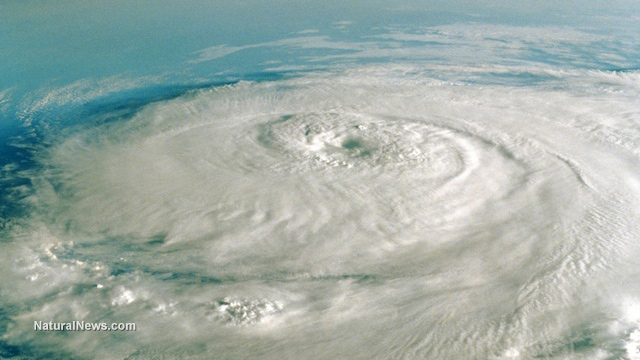
In fact, researchers have spent the past century working to develop climate and weather control technologies. But a 1999 study by the U.S. Air Force nailed it: Within three decades, the report's authors concluded, the United States military should have perfected methods to control weather.
As reported at the time by WorldNetDaily, the Air Force study titled, "Weather as A Force Multiplier: Owning the Weather In 2025," which was commissioned by then-Air Force Chief of Staff Michael Ryan and first presented in 1996, authors predicted that the technology was within reach.
As noted by WND:
Military planners have often bemoaned the fact that during critical operations weather has been a mitigating factor. Though the U.S. military is generally considered superior to the forces of other nations and can wage war in most kinds of weather, Air Force operations traditionally have suffered the most from inclement weather like rain, fog, and other low-visibility conditions.
Click here to search GoodGopher.com for more information about geoengineering.
Weather control as a weapon
The Air Force is the branch of service tasked with most of the military's satellite and space surveillance; weather conditions can degrade the ability of sensitive surveillance equipment like infrared technology and imagery programs. As such, the Air Force has long sought to defeat natural phenomena because planners believe that without weather-modification capability, critical combat missions in the future would be hampered, to the detriment of U.S. forces.
"Achieving such a highly accurate and reasonably precise weather-modification capability in the next 30 years will require overcoming some challenging but not insurmountable technological and legal hurdles," the report said.
The authors added that altering weather patterns would eventually become an "integral part of U.S. national security policy with both domestic and international applications."
"Society will have to provide the resources and legal basis for a mature capability to develop," they wrote, signaling that the Air Force believes public reluctance and likely legal battles would be hurdles to the development and deployment of a global weather-modification system.
Today, one of the most widely pursued weather modification techniques is called cloud seeding, using in an attempt to cause rain or snow, generally to boost an area's moisture content.
"Weather modification, commonly known as cloud seeding, is the application of scientific technology that can enhance a cloud's ability to produce precipitation," says the web site Weather Modification, Inc., which says the company is able to provide aerial or ground-based cloud seeding.
The company's current projects listing includes federal and state governments, as well as academic institutes and private corporations (interestingly, the company's client list doesnot include the state of California, which is currently experiencing a historic drought).
Then there is HAARP, one of the better-known weather modification projects. Officially called the High Frequency Active Auroral Research Program, its aim is not simply weather modification but also electromagnetic warfare, according to Canada-based Center for Research on Globalization.
"It isn't just conspiracy theorists who are concerned about HAARP. The European Union called the project a global concern and passed a resolution calling for more information on its health and environmental risks. Despite those concerns, officials at HAARP insist the project is nothing more sinister than a radio science research facility," said a Canadian Broadcasting Corporation documentary, cited by Global Research.
HAARP is a U.S. military program; researchers at the Global Research center believe the technology is part of the Defense Department's "Joint Vision 2020," which seeks to achieve "full spectrum dominance" of battle spaces.
A history of covert military weather modification programs
Weather modification for military defense is not a new idea; in fact, the U.S. military attempted to create weather obstructions during the Vietnam War by dropping silver iodide particles in the clouds during the infamous Operation Popeye. Altheadlines.com describes the operation:
Between 1967 and 1972, the US air force carried out "Operation Popeye", the first use of weather as an instrument of war. Almost 3,000 flights were sent into the skies above the Ho Chi Minh Trail, where planes seeded clouds with silver iodide particles, causing storms and extendingthe monsoon season. "Popeye" turned the strategic pass into a bog -- and appalled the international community. In 1977, the Enmod (Environmental Modification Convention) treaty outlawed weather warfare.
Click here to find articles on GoodGopher.com about Operation Popeye.
HAARP as 'full dominance' weapon
According to a 2000 report by the American Forces Press Service:
Full-spectrum dominance means the ability of U.S. forces, operating alone or with allies, to defeat any adversary and control any situation across the range of military operations.
While full-spectrum dominance is the goal, the way to get there is to "invest in and develop new military capabilities." The four capabilities at the heart of full-spectrum dominance are dominant maneuver, precision engagement, focused logistics and full-dimensional protection.
Read the full Center for Research on Globalization's HAARP report here.
Sources:
http://www.geoengineeringwatch.org
http://mobile.ryan.test.wnd.com
http://www.weathermodification.com
http://www.defense.gov
http://www.globalresearch.ca
http://www.altheadlines.com
100 years of patents reveal secret history of U.S. weather control programs
Thursday, July 30, 2015 by: J. D. Heyes
Tags: geoengineering, patents, weather control
Tags: geoengineering, patents, weather control
(NaturalNews) Have the U.S. government and American researchers been toying with the notion of controlling, changing or otherwise adapting the weather? According to this comprehensive and exhaustive list of patents, the answer is yes.
In fact, researchers have spent the past century working to develop climate and weather control technologies. But a 1999 study by the U.S. Air Force nailed it: Within three decades, the report's authors concluded, the United States military should have perfected methods to control weather.
As reported at the time by WorldNetDaily, the Air Force study titled, "Weather as A Force Multiplier: Owning the Weather In 2025," which was commissioned by then-Air Force Chief of Staff Michael Ryan and first presented in 1996, authors predicted that the technology was within reach.
As noted by WND:
Military planners have often bemoaned the fact that during critical operations weather has been a mitigating factor. Though the U.S. military is generally considered superior to the forces of other nations and can wage war in most kinds of weather, Air Force operations traditionally have suffered the most from inclement weather like rain, fog, and other low-visibility conditions.
Click here to search GoodGopher.com for more information about geoengineering.
Weather control as a weapon
The Air Force is the branch of service tasked with most of the military's satellite and space surveillance; weather conditions can degrade the ability of sensitive surveillance equipment like infrared technology and imagery programs. As such, the Air Force has long sought to defeat natural phenomena because planners believe that without weather-modification capability, critical combat missions in the future would be hampered, to the detriment of U.S. forces.
"Achieving such a highly accurate and reasonably precise weather-modification capability in the next 30 years will require overcoming some challenging but not insurmountable technological and legal hurdles," the report said.
The authors added that altering weather patterns would eventually become an "integral part of U.S. national security policy with both domestic and international applications."
"Society will have to provide the resources and legal basis for a mature capability to develop," they wrote, signaling that the Air Force believes public reluctance and likely legal battles would be hurdles to the development and deployment of a global weather-modification system.
Today, one of the most widely pursued weather modification techniques is called cloud seeding, using in an attempt to cause rain or snow, generally to boost an area's moisture content.
"Weather modification, commonly known as cloud seeding, is the application of scientific technology that can enhance a cloud's ability to produce precipitation," says the web site Weather Modification, Inc., which says the company is able to provide aerial or ground-based cloud seeding.
The company's current projects listing includes federal and state governments, as well as academic institutes and private corporations (interestingly, the company's client list doesnot include the state of California, which is currently experiencing a historic drought).
Then there is HAARP, one of the better-known weather modification projects. Officially called the High Frequency Active Auroral Research Program, its aim is not simply weather modification but also electromagnetic warfare, according to Canada-based Center for Research on Globalization.
"It isn't just conspiracy theorists who are concerned about HAARP. The European Union called the project a global concern and passed a resolution calling for more information on its health and environmental risks. Despite those concerns, officials at HAARP insist the project is nothing more sinister than a radio science research facility," said a Canadian Broadcasting Corporation documentary, cited by Global Research.
HAARP is a U.S. military program; researchers at the Global Research center believe the technology is part of the Defense Department's "Joint Vision 2020," which seeks to achieve "full spectrum dominance" of battle spaces.
A history of covert military weather modification programs
Weather modification for military defense is not a new idea; in fact, the U.S. military attempted to create weather obstructions during the Vietnam War by dropping silver iodide particles in the clouds during the infamous Operation Popeye. Altheadlines.com describes the operation:
Between 1967 and 1972, the US air force carried out "Operation Popeye", the first use of weather as an instrument of war. Almost 3,000 flights were sent into the skies above the Ho Chi Minh Trail, where planes seeded clouds with silver iodide particles, causing storms and extendingthe monsoon season. "Popeye" turned the strategic pass into a bog -- and appalled the international community. In 1977, the Enmod (Environmental Modification Convention) treaty outlawed weather warfare.
Click here to find articles on GoodGopher.com about Operation Popeye.
HAARP as 'full dominance' weapon
According to a 2000 report by the American Forces Press Service:
Full-spectrum dominance means the ability of U.S. forces, operating alone or with allies, to defeat any adversary and control any situation across the range of military operations.
While full-spectrum dominance is the goal, the way to get there is to "invest in and develop new military capabilities." The four capabilities at the heart of full-spectrum dominance are dominant maneuver, precision engagement, focused logistics and full-dimensional protection.
Read the full Center for Research on Globalization's HAARP report here.
Sources:
http://www.geoengineeringwatch.org
http://mobile.ryan.test.wnd.com
http://www.weathermodification.com
http://www.defense.gov
http://www.globalresearch.ca
http://www.altheadlines.com
Friday, July 24, 2015
San Francisco's Fog: One of the Government's Largest Biological Warfare Experiments
http://www.msn.com/en-us/news/us/one-of-the-largest-human-experiments-in-history-was-conducted-on-the-unsuspecting-residents-of-san-francisco/ar-AAcLRre?ocid=U218DHP

© Provided by Business Insider San Francisco Fog
San Francisco's fog is famous, especially in the summer, when weather conditions combine to create the characteristic cooling blanket that sits over the Bay Area.
But one fact many may not know about San Francisco's fog is that in 1950, the US military conducted a test to see whether it could be used to help spread a biological weapon in a"simulated germ warfare attack." This was just the start of many such tests around the country that would go on in secret for years.
The test was a success, as Rebecca Kreston explains over at Discover Magazine, and also "one of the largest human experiments in history." But as she writes, it was also "one of the largest offenses of the Nuremberg Code since its inception." The code stipulates that "voluntary, informed consent" is required for research participants, and that experiments that might lead to death or disabling injury are unacceptable.
The unsuspecting residents of San Francisco certainly could not consent to the military's germ warfare test, and there's good evidence that it could have caused the death of at least one resident of the city, Edward Nevin, and hospitalized 10 others.
This is a crazy story, one that seems like it must be a conspiracy theory. An internet search will reveal plenty of misinformation and unbelievable conjecture about these experiments. But the core of this incredible tale is documented and true.
'A successful biological warfare attack'
It all began in late September of 1950, when over a few days, a Navy vessel used giant hoses to spray a fog of two kinds of bacteria, Serratia marcescens and Bacillus globigii — both believed at the time to be harmless — out into the fog, where they disappeared and spread over the city.
"It was noted that a successful BW [biological warfare] attack on this area can be launched from the sea, and that effective dosages can be produced over relatively large areas," concluded a later-declassified military report, cited by the Wall Street Journal.
Successful indeed, according to Leonard Cole, director of the Terror Medicine and Security Program at Rutgers New Jersey Medical School. His book, "Clouds of Secrecy," documents the military's secret bio-weapon tests over populated areas. Cole wrote:
Nearly all of San Francisco received 500 particle minutes per liter. In other words, nearly every one of the 800,000 people in San Francisco exposed to the cloud at normal breathing rate (10 liters per minute) inhaled 5000 or more particles per minute during the several hours that they remained airborne.
This was among the first but far from the last of these sorts of tests.
Tests included the large-scale releases of bacteria in the New York City subway system, on the Pennsylvania Turnpike, and in National Airport.
Over the next 20 years, the military would conduct 239 "germ warfare" tests over populated areas, according to news reports from the 1970s (after the secret tests had been revealed) in The New York Times, Washington Post, Associated Press and other publications (via Lexis-Nexis), and also detailed in congressional testimony from the 1970s.
These tests included the large-scale releases of bacteria in the New York City subway system, on the Pennsylvania Turnpike, and in National Airport just outside Washington, D.C.
In a 1994 congressional testimony, Cole said that none of this had been revealed to the public until a 1976 newspaper story revealed the story of a few of the first experiments — though at least a Senate subcommittee had heard testimony about experiments in New York City in 1975, according to a 1995 Newsday report.
A mysterious death
When Edward Nevin III, the grandson of the Edward Nevin who died in 1950, read about one of those early tests in San Francisco, he connected the story to his grandfather's death from a mysterious bacterial infection. He began to try to convince the government to reveal more data about these experiments. In 1977, they released a report detailing more of that activity.
In 1950, the first Edward Nevin had been recovering from a prostate surgery when he suddenly fell ill with a severe urinary tract infection containing Serratia marcescens, that theoretically harmless bacteria that's known for turning bread red in color. The bacteria had reportedly never been found in the hospital before and was rare in the Bay Area (and in California in general).
The bacteria spread to Nevin's heart and he died a few weeks later.
Another 10 patients showed up in the hospital over the next few months, all with pneumonia symptoms and the odd presence of Serratia marcescens. They all recovered.
Nevin's grandson tried to sue the government for wrongful death, but the court held that the government was immune to a lawsuit for negligence and that they were justified in conducting tests without subjects' knowledge. According to the Wall Street Journal, the Army stated that infections must have occurred inside the hospital and the US Attorney argued that they had to conduct tests in a populated area to see how a biological agent would affect that area.
In 2005, the FDA stated that "Serratia marcescens bacteria ... can cause serious, life-threatening illness in patients with compromised immune systems." The bacteria has shown up in a few other Bay Area health crises since the 1950s, according to the San Francisco Chronicle, leading to some speculation that the original spraying could have established a new microbial population in the area.
While Nevin lost his lawsuit, he said afterwards, as quoted by Cole, "At least we are all aware of what can happen, even in this country ... I just hope the story won’t be forgotten."
Thursday, July 23, 2015

Thursday, June 4, 2015
Keep Big Oil Out of Climate Negotiations: Petition
http://www.kickbigpollutersout.com/?code=EA
Sign the petition to the Parties to the United Nations Framework Convention on Climate Change:
"We call on you to take immediate action to protect COP21 and all future negotiations from the influence of big polluters. Given the fossil fuel industry’s years of interference intended to block progress, push false solutions, and continue the disastrous status quo, the time has come to stop treating big polluters as legitimate “stakeholders” and to remove them from climate policymaking."
Today, we are facing the prospect of the destruction of life as we know it and irreversible damage to our planet due to climate change. Scientists are telling us with ever more urgency that we must act quickly to stop extracting fossil fuels and reduce greenhouse gas emissions. But the world’s largest polluters have prevented progress on bold climate action for far too long.
We call on the Parties to the UNFCCC to protect the UN climate talks and climate policymaking around the world from the influence of big polluters. The world is looking to the next round of negotiations – in Paris this December – for decisive action on climate. This is a pivotal moment to create real solutions. We need a strong outcome from the Paris talks in order to seize the momentum of a growing global movement, and to urge leaders to take bolder action to address the climate crisis.
But the fossil fuel industry and other transnational corporations that have a vested interest in stopping progress continue to delay, weaken, and block climate policy at every level. From the World Coal Association hosting a summit on "clean coal" around COP19 to Shell aggressively lobbying in the European Union for weak renewable energy goals while promoting gas – these big polluters are peddling false solutions to protect their profits while driving the climate crisis closer to the brink.
A decade ago, the international community took on another behemoth industry – Big Tobacco – and created a precedent-setting treaty mechanism that removed the tobacco industry from public health policy. This can happen again here.
Corporate Accountability International will deliver this message and the list of signatures at the climate talks in Bonn, Germany, the first week of June. We will do another delivery by the end of COP21 in Paris this December.
Participating organizations:
350.org
Amazon Watch
Chesapeake Climate Action Network
Climate Action Network International
Corporate Accountability International
CREDO Action
Daily Kos
Environmental Action
Food & Water Watch
Federation of Young European Greens
Forecast the Facts
Greenpeace USA
League of Conservation Voters
Oil Change International
People for the American Way
Rainforest Action Network
RH Reality Check
SumOfUs
The Natural History Museum
350.org
Amazon Watch
Chesapeake Climate Action Network
Climate Action Network International
Corporate Accountability International
CREDO Action
Daily Kos
Environmental Action
Food & Water Watch
Federation of Young European Greens
Forecast the Facts
Greenpeace USA
League of Conservation Voters
Oil Change International
People for the American Way
Rainforest Action Network
RH Reality Check
SumOfUs
The Natural History Museum
CC: UNFCCC Executive Secretary Christiana Figueres
UN Secretary General Ban Ki-moon
Outgoing COP20 President Manuel Pulgar-Vidal
Incoming COP21 President Laurent Fabius
UN Secretary General Ban Ki-moon
Outgoing COP20 President Manuel Pulgar-Vidal
Incoming COP21 President Laurent Fabius
Oil Companies @ World Climate Talks/Negotiations?
Should oil companies have a seat at the climate negotiating table?
U.N. negotiators are meeting in Bonn, Germany, this week to continue to hash out the global climate deal that will (hopefully) be signed in Paris later this year. And, just in time for these negotiations, a new coalition is calling on governments to get some carbon-pricing mechanisms in place. This coalition, however, has an unusual membership: CEOs of major, Europe-based oil companies.
Chief executives of the U.K.’s BP and BG Group, British/Dutch Shell, Italy’s Eni, Norway’s Statoil, and France’s Total sent a letter to the U.N. stating that “we need governments across the world to provide us with clear, stable, long-term, ambitious policy frameworks. … We believe that a price on carbon should be a key element of these frameworks.” Earlier in the letter, the six companies “acknowledge that the current trend of greenhouse gas emissions” would fail to “limit the temperature rise to no more than 2 degrees above pre-industrial levels.”
“The challenge is how to meet greater energy demand with less CO2,” the letter continues. “We stand ready to play our part.”
Of course, not everyone is eager for the companies who for years resisted regulations like carbon pricing to plop down at the negotiating table.
“I think what these corporations are looking to do is to change the conversation from one of global emissions standards and top-down governmental enforcement of standards to one … where these corporations can buy and sell pollution and find different ways to continue to do what they’re doing, which is contributing to climate change in a very real way,” said Jesse Bragg of Corporate Accountability International, a group that’s trying to keep corporate players away from the climate negotiations.
“We need long-term solutions,” he told Grist. “So the solution here is find ways to keep it in the ground and replace our energy needs with renewables. And any conversation about finding ways to use more natural gas and oil is a distraction from the actual solution.”
CAI and a number of prominent environmental groups, including Greenpeace USA, 350.org, and the League of Conservation Voters, recently petitioned the U.N. to keep polluting corporations away from climate change negotiations. The groups say that the industry “interferes at all levels,” including by providing sponsorship for the talks themselves.
The U.N. climate change leadership, however, has called for more cooperation between polluting industries and proponents of a climate deal. “Bringing them with us has more strength than demonizing them,” Christiana Figueres, executive secretary of the U.N. Framework Convention on Climate Change, said in May.
Not all green groups are cynical about the intention of the letter; some are enthusiastic about the progress it represents. “This is a symbolic moment, and demonstrates an important if not universal shift,” said Mark Kenber, CEO of The Climate Group, an international NGO. “It helps increase the likelihood of a positive outcome at COP21 by sending a signal to the wider business community, and showing that the direction of travel is towards comprehensive and effective regimes regulating carbon emissions.”
Even CAI sees the letter as an encouraging sign: “Many of the NGOs I’ve spoken with see this as a sign of them running scared, in a way,” said Bragg. “In terms of the movement, this is a good sign because it means that this work is having an effect and creating a need for them to respond and regroup and create a strategy … In that letter, the gas and oil industry took a couple shots at the coal industry, trying to differentiate themselves: ‘At least we’re not coal.’”
Some major oil companies were conspicuously absent from the letter, including U.S.-based ExxonMobil and Chevron. An industry source told Reuters that the two companies knew about the initiative, but didn’t want to sign on. “It’s clear that there is a difference of views on each side of the Atlantic,” Patrick Pouyanne, CEO of the French oil company Total, told reporters. He said the European companies were still chatting with Exxon and Chevron, and hoped they too would sign the letter soon.
Subscribe to:
Posts (Atom)